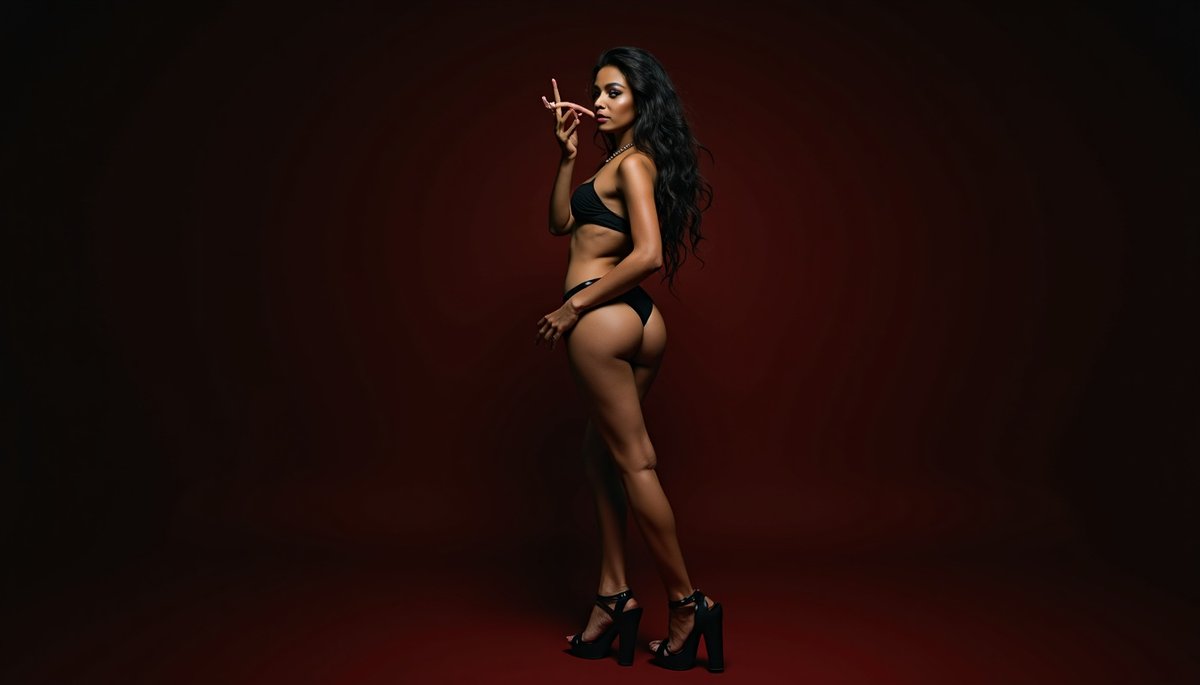
The digital canvas is boundless, but for years, AI image generation felt like painting with one hand tied behind your back. Algorithms, designed with the best intentions, often stifled true creative exploration, pushing users towards sanitized, generic outputs. But now, a new frontier is emerging: Understanding Uncensored AI Image Generation. This isn't about promoting harmful content or sidestepping legal boundaries; it's about unlocking a broader spectrum of authentic visual expression, allowing creators to realize visions without arbitrary algorithmic interference. In 2025, fueled by deep learning breakthroughs, this innovation is redefining what's possible, empowering artists, designers, and storytellers to push creative limits while navigating complex ethical landscapes.
At a Glance: Key Takeaways
- Uncensored AI Defined: It means AI models with minimal predefined content restrictions, fostering broader creative expression within legal and community standards. It’s about freedom, not lawlessness.
- Powerhouse Technologies: Sophisticated deep learning models like Diffusion Models are the backbone, requiring immense computing power.
- Leading Platforms: Innovators like ReelMind.ai offer extensive model libraries (Flux Series, Sora, Kling AI), advanced video/image tools, and a unique AI agent director, Nolan, to revolutionize content creation.
- Creative Revolution: Uncensored AI transforms art, design, and photography, turning creators into AI collaborators for rapid ideation and "impossible" visuals.
- Ethical Crossroads: Addressing "AI art theft" (training data), the "uncanny valley," and preventing misuse through responsible development and evolving regulations (e.g., EU AI Act) are critical.
- Practical Steps: Master prompt engineering, iterate relentlessly, integrate AI into your workflow, and always prioritize ethical considerations.
Unpacking "Uncensored": Beyond the Filters
When we talk about uncensored AI image generation, it's crucial to clarify what we don't mean. This isn't a free pass for generating illegal, hateful, or abusive content. Reputable platforms and models operate within clear terms of service and legal frameworks. Instead, "uncensored" refers to AI models trained and deployed with minimal predefined content restrictions that might otherwise limit legitimate creative expression.
Think of it this way: traditional AI models often come with overly broad filters that might, for example, block any image containing nudity, regardless of context. This could prevent a medical illustrator from accurately depicting human anatomy, a horror artist from exploring grotesque themes, or a dark fantasy writer from visualizing a truly eerie creature. Uncensored AI aims to move beyond these overly strict, often biased, content filters. It allows for the visual realization of a broader spectrum of human experience and imagination—from medically accurate anatomical studies to challenging fine art, from unsettling horror to fantastical dreamscapes—without algorithmic interference, provided it still adheres to community standards and legal compliance.
This freedom also plays a vital role in mitigating algorithmic bias, allowing for a more representative and diverse range of outputs that aren't skewed by narrow, pre-programmed sensibilities.
The Engine Room: Core Technologies Driving Creative Liberation
Behind every breathtaking AI-generated image lies a complex interplay of advanced deep learning models and immense computational power. The breakthroughs fueling this new era of visual freedom are primarily rooted in two sophisticated architectures:
Generative Adversarial Networks (GANs)
While slightly older, GANs were pioneers in the field. They consist of two neural networks, a Generator and a Discriminator, locked in a perpetual game of cat and mouse. The Generator creates images, trying to fool the Discriminator into believing they're real. The Discriminator tries to distinguish real images from the Generator's fakes. Through this adversarial process, both networks improve, with the Generator eventually learning to produce incredibly realistic outputs.
Diffusion Models: The New Gold Standard
Today, Diffusion Models are largely at the forefront of high-fidelity, coherent image generation. These models work by learning to reverse a process of noise addition. Imagine taking a clear image and progressively adding random noise until it's just static. A Diffusion Model learns to do the exact opposite: starting from pure noise, it iteratively refines the signal, "denoising" the image step by step until a coherent, detailed picture emerges. This iterative refinement process is what allows Diffusion Models to generate images with unparalleled detail, consistency, and artistic quality, making them ideal for the nuanced demands of uncensored creation.
The Power Beneath the Pixels
Training and running these cutting-edge models are not trivial tasks. They demand immense processing power, relying on high-performance computing clusters and specialized AI accelerators like GPUs (Graphics Processing Units) and TPUs (Tensor Processing Units). These hardware behemoths perform trillions of calculations per second, essential for the intricate neural network operations that bring AI visions to life. This infrastructure requirement is why many creators turn to powerful platforms that abstract away this complexity.
The Creator's Toolkit: Platforms & Capabilities Pushing Boundaries
The theoretical power of uncensored AI means little without accessible platforms that put it into creators' hands. Pioneers like ReelMind.ai are at the forefront, offering a comprehensive ecosystem designed to unlock unprecedented creative freedom and efficiency.
ReelMind.ai stands out as a robust platform, empowering creators with access to over 101 advanced AI models. Built on a modern tech stack (NestJS framework with TypeScript, leveraging Cloudflare for storage and Supabase Auth for secure access), it’s engineered for performance and scalability. For those eager to dive in and explore the capabilities, you can often generate free uncensored AI images to get a feel for the creative possibilities.
Premium & Specialized Models: A Universe of Styles
ReelMind.ai offers a curated selection of leading AI models, each with its unique strengths:
- Flux Series: This premium suite includes Flux Pro, Flux Dev, Flux Schnell, and Flux Redux. Renowned for their ability to generate hyper-realistic, high-fidelity images and video, the Flux Series is often the go-to for professional-grade output where visual authenticity is paramount.
- Runway Gen-4 & Gen-3 Alpha Turbo: These models push the boundaries of AI video generation, offering powerful tools for bringing static images and text to life with dynamic motion.
- OpenAI Sora Series (Sora Turbo, Sora Standard): OpenAI's groundbreaking video generation models provide exceptional quality and control, allowing for complex scenes and camera movements directly from text prompts.
- Kling AI Series: Known for its innovative approach to narrative and character consistency, the Kling AI Series is a favorite for storytellers.
- Specialized Offerings: Beyond the marquee names, ReelMind.ai provides a wealth of specialized models:
- PixVerse V4.5: Offers 20 cinematic lens controls and multi-image referencing, perfect for filmmakers seeking specific visual aesthetics.
- MiniMax Hailuo 02, Luma Ray 2, Pika 2.2, Vidu Q1: These models excel in various niches, from intricate detail generation to multimodal input, with Vidu Q1 uniquely supporting up to 7 reference images for unparalleled control.
- Tencent Hunyuan Video, Alibaba Wan Series, Framepack, MAGI-1 (Distilled), CogVideoX-5B: Further expand the toolkit, providing diverse approaches to video and image synthesis, ensuring creators can find the right model for any project.
Core Functionality: Beyond Basic Generation
The power of these models is amplified by ReelMind.ai's comprehensive feature set:
- AI Video Generation: Transform text descriptions into captivating videos (text-to-video), animate static images (image-to-video), or dynamically alter existing footage (video-to-video).
- Sophisticated Image Editing: Go beyond simple prompts with tools like Lego Pixel processing for precise control and multi-image fusion, which intelligently blends elements from various sources.
- Batch Generation: Efficiently produce multiple variations or series of images/videos, accelerating ideation and production workflows.
- Sound Studio: Integrate AI voice synthesis and AI-generated background music directly into your projects, creating complete audiovisual experiences.
Nolan: The World's First AI Agent Director
ReelMind.ai's flagship innovation is Nolan, an intelligent filmmaking tool that goes far beyond simple generation. Nolan acts as your AI agent director, offering:
- Intelligent Scene Composition: Suggests optimal arrangements of elements within a frame.
- Narrative Structure Guidance: Helps outline story arcs and sequence events for maximum impact.
- Automated Cinematography: Handles complex technical aspects like camera angles, shot types, movements, lens choices, and lighting schemes, allowing creators to focus on the story.
- Workflow Optimization: Provides overall production assistance, significantly optimizing render times and streamlining the entire filmmaking process.
Multi-Image Fusion & Character Consistency
A common challenge in AI-generated narratives is maintaining consistency—especially for characters—across multiple scenes, different styles, or evolving themes. ReelMind.ai's multi-image fusion capabilities directly address this, ensuring your protagonist looks the same whether they're in a close-up, a wide shot, or an entirely new setting, which is crucial for cohesive storytelling.
Community Market: Train, Publish, Earn
ReelMind.ai fosters a vibrant creator ecosystem through its Community Market. Here, users can train and publish their own specialized AI models, allowing others to leverage their unique skills. This innovative feature enables creators to earn credits and even revenue through blockchain-based transactions, democratizing access to powerful AI tools and monetizing expertise. It's a testament to how platforms are evolving to support the creator economy.
Transforming Industries: The Impact of Creative Freedom
Uncensored AI image generation isn't just a technological marvel; it's a profound paradigm shift impacting diverse creative fields. It fundamentally alters the relationship between creator and tool, moving towards a more collaborative, iterative, and expansive process.
Art: From Solo Creator to Collaborative Partner
For artists, AI transforms the creative process from a solitary act into a dynamic partnership. Instead of spending hours sketching preliminary ideas, artists can rapidly ideate, generating countless variations of concepts, styles, and compositions in minutes. This speed allows for deeper exploration of difficult themes, surreal concepts, or highly niche aesthetics that might have been too time-consuming or technically challenging before. The AI becomes a tireless assistant, a thought-partner capable of rendering visions that might otherwise remain confined to the imagination. Some artists even embrace the "AI Surrealism" or "Glitch Art" that can emerge from imperfect generations, turning algorithmic quirks into a new aesthetic.
Design: Hyper-Personalization and Rapid Prototyping
Designers are leveraging uncensored AI for unparalleled efficiency and customization. From graphic design to product prototypes, AI facilitates:
- Hyper-Personalized Ideation: Rapidly generate bespoke logos, layouts, and mockups tailored to specific client needs or target audiences, exploring brand identities with unprecedented speed.
- Accelerated Prototyping: Quickly visualize and iterate on concepts, creating numerous design options in a fraction of the time. This is invaluable for everything from packaging design to architectural renders.
- Bespoke Asset Creation: Generate unique textures, patterns, icons, and illustrations that precisely fit a project's aesthetic, eliminating the need for extensive stock photo libraries or manual creation.
Photography: The New Digital Darkroom and "Impossible" Shots
The impact on photography is equally transformative, creating what some call "the new digital darkroom":
- Generative Fill & Restoration: Tools can seamlessly add or remove elements, extend backgrounds, or restore damaged photographs with astonishing realism, expanding the photographer's ability to manipulate scenes without traditional editing constraints.
- "Impossible Photography": AI untethers photography from physical limitations. No longer bound by location, lighting, or subject availability, photographers can create hyper-realistic images of events, scenarios, or beings that simply do not exist in the physical world. This opens doors for conceptual photography, scientific visualization, and fantastical narratives that were once the exclusive domain of illustrators or CGI artists.
This also allows creators to experiment with advanced AI image generation to push the boundaries of what is visually attainable.
Navigating the Ethical Labyrinth: Controversies & Responsible Innovation
While uncensored AI image generation unlocks immense creative potential, it also introduces significant ethical considerations and controversies that demand careful navigation. Responsible development and thoughtful usage are paramount.
The AI Art Theft Dilemma: Training Data Ethics
Perhaps the most debated aspect is the "AI art theft" controversy. AI diffusion models don't "copy" images in the traditional sense; instead, they learn statistical patterns, styles, and relationships from vast datasets, which often include copyrighted material scraped from the internet without explicit permission or compensation to the original creators.
- Learning vs. Copying: AI models learn how to create in a certain style, much like a human artist studies various works, rather than directly reproducing existing pieces.
- Ethical Gray Area: The core issue lies in the unconsented use of copyrighted material for training. While legally complex (fair use arguments, transformative nature), many artists feel their intellectual property has been used without acknowledgment or recompense.
- The Future: This dilemma is driving efforts towards opt-out mechanisms for artists, licensed training datasets, and new compensation models.
The "Uncanny Valley": When AI Art Gets Creepy
AI-generated images, particularly those attempting realism, can sometimes fall into the "uncanny valley"—a phenomenon where near-human entities evoke feelings of eeriness or revulsion due to subtle imperfections. This is often seen in:
- Imperfect Human Features: AI might misinterpret anatomical details, leading to incorrect numbers of fingers, distorted facial features, or unnatural body proportions.
- Algorithmic Artifacts: Subtle visual glitches, strange textures, or illogical elements can betray the AI's non-human origin.
While some creators actively embrace these imperfections for "AI Surrealism" or "Glitch Art," transforming glitches into stylistic choices, for others, it's a hurdle to overcome in pursuit of perfect realism.
Responsible Development: Safeguards and Community Standards
Leading platforms are acutely aware of the potential for misuse and are implementing robust safeguards:
- Advanced Content Moderation: Sophisticated AI-powered and human moderation systems are in place to detect and prevent the generation of illegal, harmful, or illicit content.
- User Reporting Systems: Community feedback mechanisms allow users to report problematic content or misuse, fostering a self-regulating environment.
- Clear Terms of Service (ToS): Explicit guidelines outline acceptable use, prohibiting malicious deepfakes, intellectual property infringement, harassment, and other harmful applications. Violations lead to account suspension or termination.
- Transparency: Increasingly, platforms are aiming for transparency regarding how models are trained and what content is permissible, allowing users to make informed choices.
The Evolving Regulatory Landscape
Governments worldwide are recognizing the profound societal impact of AI and are actively developing regulatory frameworks.
- EU AI Act: A pioneering example, this legislation classifies AI systems by risk level, imposing stricter requirements on "high-risk" applications. It addresses issues of transparency, data governance, and fundamental rights.
- Copyright & Intellectual Property: Legal systems are grappling with how existing copyright laws apply to AI-generated content, especially regarding ownership, originality, and the use of training data.
- Ethical Implications: Beyond legality, regulators are considering broader ethical implications, such as bias, discrimination, and the potential for misuse, including the generation of disinformation or harmful content. Staying informed about these developments is crucial for any creator navigating this space. You can even access uncensored AI generation tools for free to understand the practical applications of these debates.
Charting Your Course: Actionable Insights & Best Practices
Stepping into the world of uncensored AI image generation can feel daunting, but with a structured approach and adherence to best practices, you can unlock its full potential responsibly.
Immediate Action: Experiment and Explore
The best way to understand the capabilities and limitations of uncensored AI is to get hands-on.
- Diverse Models: Start experimenting with different AI models available on platforms like ReelMind.ai. Each model has its unique strengths, biases, and artistic sensibilities. Try the Flux Series for photorealism, Sora for dynamic video, or PixVerse for cinematic control.
- Understand the "Why": Pay attention to why certain generations succeed or fail. This builds intuition that's invaluable for refining your approach.
Future Evolution (2-3 Years): What to Expect
The pace of AI development is relentless. In the next 2-3 years, anticipate:
- More Intuitive Interfaces: AI tools will become even easier to use, abstracting away technical complexities.
- Greater Real-Time Control: Expect more immediate feedback and direct manipulation of generated content.
- Deeper Integration: AI will seamlessly weave into existing creative workflows and software suites (e.g., Photoshop, Premiere Pro).
- Complex, Interactive Experiences: Beyond static images and videos, expect AI to contribute to interactive media, virtual reality, and dynamic storytelling environments.
A Structured Approach for Creators
To harness uncensored AI effectively, consider a four-stage process:
- Assessment and Planning:
- Define Goals: Clearly articulate your project's objectives. What do you want to create? What message are you conveying?
- Desired Aesthetic & Narrative: Pinpoint the visual style, mood, and core story elements you're aiming for. This specificity guides your model and prompt choices.
- Tool Selection and Setup:
- Choose Appropriate AI Models: Based on your goals, select models known for their strengths (e.g., Flux Pro for hyperrealism, Kling AI for character consistency).
- Account Setup: Create accounts on your chosen platforms (like ReelMind.ai), understand their credit systems, and review terms of service.
- Implementation and Testing:
- Iterative Generation: Don't expect perfection on the first try. Generate content, analyze results, and refine your prompts.
- Multi-Image Fusion: For projects requiring consistent characters or themes, leverage tools like ReelMind.ai's multi-image fusion capabilities early in the process.
- Experimentation: Push the boundaries. Try unconventional prompts, blend styles, and see what unexpected results emerge. You can try out various uncensored AI generators to expand your creative repertoire.
- Optimization and Scaling:
- Enhance Content: Use post-processing tools (both AI-powered and traditional) to refine details, color grade, and add finishing touches.
- Audio Integration: If creating video, utilize AI voice synthesis and AI-generated background music from tools like ReelMind.ai's Sound Studio.
- Leverage Nolan AI Agent Director: For larger or more complex video projects, deploy Nolan to automate cinematography, optimize render times, and guide narrative structure for a polished final production.
Best Practices for Responsible Creation
- Master Prompt Engineering: Specificity is key. Detail subjects, styles, moods, lighting, camera angles, and artistic influences. Experiment with negative prompts to exclude unwanted elements.
- Iterate and Inpaint: Don't settle for the first output. Generate variations, use inpainting/outpainting to refine specific areas, and continually adjust your prompts.
- AI as a Springboard: View AI as a powerful assistant, not a replacement. Often, the best results combine AI generation with human post-processing, editing, and artistic refinement.
- Understand the Ethics:
- Avoid Malicious Deepfakes: Never use AI to create misleading or harmful content depicting real individuals without their explicit consent.
- No Harmful Content: Steer clear of generating hate speech, illegal material, or any content that violates community standards.
- Respect Copyright (where applicable): While AI's legal landscape is evolving, be mindful of mimicking living artists' signature styles without their consent, especially if used commercially. Consider licensed models or datasets where possible.
Common Mistakes to Avoid
- Relying Solely on Default Settings: AI models are powerful, but their generic settings often produce generic results. Dive into advanced controls and custom parameters.
- Neglecting Character Consistency: For narrative work, failing to maintain character appearance across scenes can break immersion. Proactively use multi-image referencing and fusion.
- Overlooking Ethical Considerations: Ignorance is not an excuse. Familiarize yourself with platform guidelines and the broader ethical debates to avoid misuse and reputational damage.
- Expecting Perfection Without Iteration: AI is an iterative process. Rarely does a perfect image emerge from a single prompt. Embrace the back-and-forth.
Continued Learning Resources
The world of AI is constantly evolving. Stay ahead by:
- Advanced Model Documentation: Platforms like ReelMind.ai provide detailed guides for their specific models.
- Creator Communities: Engage with other users on platforms, forums, and social media. Sharing knowledge and experience is invaluable.
- Research & Ethical Discussions: Keep abreast of new academic research, legal developments, and ongoing ethical debates surrounding AI.
The journey into uncensored AI image generation is an exciting one, offering unparalleled creative freedom. By embracing powerful tools, understanding their ethical implications, and committing to continuous learning, you can responsibly harness this transformative technology to bring your most ambitious visions to life. It's time to explore what you can create when the only true limits are your imagination and your ethical compass. To truly grasp the potential, start generating free uncensored AI images and see where your creativity takes you.